
Employee engagement is one of the most talked-about topics when it comes to leading teams and building productivity inside a business.
And despite what many leaders think – it isn’t a “nice-to-have”.
Around 23%, meaning the majority of employees- are either disengaged or actively disengaged at work.
Disengagement typically shows up as:
- Low energy and motivation
- Doing the minimum required
- Reduced creativity and initiative
- Higher absenteeism and burnout
- Increased turnover risk
For organisations, the impact is tangible:
- Lower productivity
- Higher recruitment and onboarding costs
- Loss of institutional knowledge
- Weaker culture and leadership credibility
For an average business employing 150 people, these costs add up quickly. Gallup estimates that disengaged employees cost organisations around 18% of their annual salary in lost productivity. In a workforce where disengagement affects the majority of employees, this can easily equate to millions of dollars per year in lost value.
In other words: engagement isn’t an HR metric. It’s a business performance issue
It’s also one of the most misunderstood performance drivers in business.
It’s a bit like the word strategy - everyone thinks they know what it means, but in practice, it means very different things to different people. Context is everything.
At its simplest, Employee Engagement isn’t about perks, happiness, or ping-pong tables. It’s about whether people actually care – about each other, about being there, and about the work they are doing.
A definition I like (even if it’s a little wordy) is this:
“Employee engagement is the emotional commitment and enthusiasm employees have for their work, their team, and their organisation - driving them to contribute beyond the basic requirements of the job.
Engagement is reflected in care, advocacy, and discretionary effort, rather than simple satisfaction or happiness”.
Definitions matter. Because if we misunderstand engagement, we invest in the wrong things - and then wonder why nothing changes.
So let's unpack this, explore some ways to improve engagement at work, look at employee engagement best practices, and some employee engagement initiatives that have been proven to lift engagement, and some ideas managers can apply immediately.
Strategy 1: Creating Emotional Commitment and Enthusiasm - the keys to employee engagement
When it comes to work, we don’t tend to like to talk about 'emotions'. Traditionally, leaders encouraged their absence in the workplace.
And yet, most of us spend a large proportion of our lives at work - with people who significantly impact our wellbeing, and often become close friends.
How many times have you heard:
“Be professional.”
“Don’t take it personally.”
“Leave your feelings at the door.”
But here’s the reality: engagement is emotional by nature.
Engagement is about having a connection with your work, your team, and a future you believe you are able to shape, together. And that connection - can’t exist without emotion.
It’s virtually impossible to expect people to connect with your business - if they don’t feel it. A purely rational bond - “I show up for pay” or “I’m here for the achievement” - creates delivery, not engagement. When the reward is gone, so are they.
People don’t give discretionary effort because they understand the strategy.
They give it because they feel part of something that is bigger than themselves, and that gives back more than just a pay pack – a sense of pride, and hope that things can be better from their input.
Research consistently shows emotional commitment grows when people:
- Feeling seen and understood
- Believing their work matters
- Trust that their manager wants them there and supports you
- Are able to experience progress and growth
This is why psychological safety and meaning consistently show up in engagement research from organisations like Deloitte and McKinsey & Company.
So how do you use emotions to create that connection & engagement? Here are some practical actions for leaders:
- Ask how people are experiencing their work - not just what they’re delivering.
- Show interest in people - purely, as a way to build connection, not as management oversight.
- Make purpose tangible at the team level (not just company-wide slogans)
- For example, take one of the company ‘values’ and make it your own. If your company values ‘precision’ ask your team to develop their own ways to personally, bring precision to life in their everyday work.
- Acknowledge effort, learning, and contribution - not just outcomes.
- Small weekly ‘share-back’ sessions, daily stand-ups, and peer recognition – are all ways to build into your culture connection and belonging, and a sense of care for each other.
- Practice ‘Hope Theory’ - ensure everyone feels ‘agency’ over their work (eg an ability to make it their own) and have ‘pathways’ for their future (eg can visualise the next stage of their development, and feel empowered to talk to leaders about their goals for progression.
Engagement starts when people feel emotionally invested, not managed. Start by recognising emotions as ‘data signals’ for how people feel, and listen to them.
Strategy 2: Through Care comes Advocacy and Discretionary effort - the tide that lifts employee engagement
Once you have authorised emotions at work, you will unlock the next level of engagement - care. When people spend so much time at work, it would be almost impossible as humans not to have some form of care for those around you.
Care can be viewed in many ways – in the workplace, one definition of caring is about being a ‘companion’ for those around you – ensuring they feel safe both psychologically and physically, and able to express their opinions, values and beliefs without judgement.
This is not about friendship, it’s about ensuring people are able to show-up and be their full self at work – naturally lifting their connection to the organisation and fuelling advocacy for the culture. The outcome – is a higher likelihood that they will contribute over and above the bare requirements of their job or role profile.
It occurs naturally, when you care. Think about your own friends and family – you will go out of your way for them. This is what care in the workplace can also create – a discretionary effort that drives productivity and performance higher, naturally, without any ‘carrot-or-=stick’ management oversight.
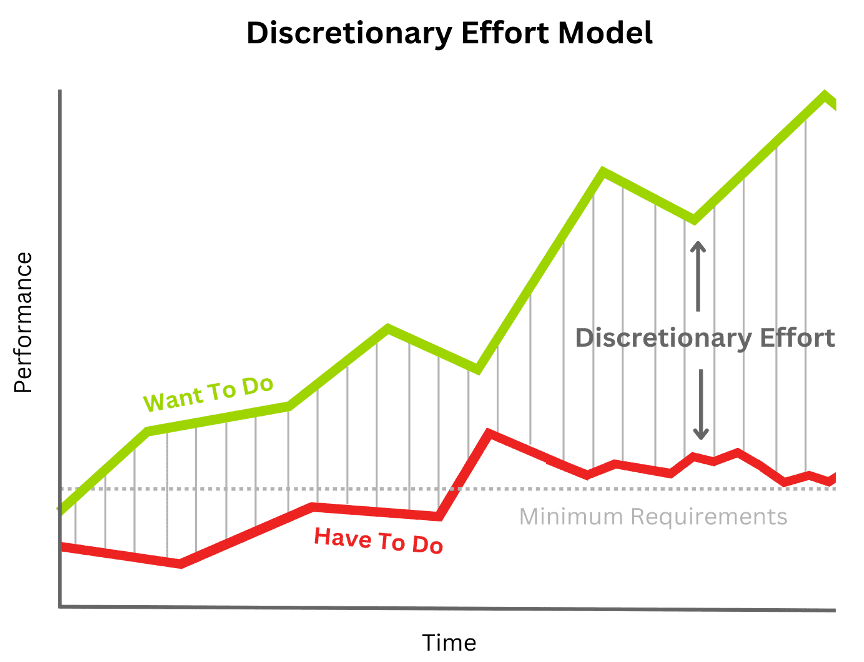
Care develops when employees believe:
- Their growth matters
- Their voice matters
- Their future is considered, not ignored
You can’t demand this.
You can’t bonus your way into it.
And you definitely can’t KPI it into existence.
Here are some practical ways to quickly create an environment of care (from the book Emotional Leadership – how to Lead in the Age of AI, by Melissa Jenner):
Deal with disconnects fast - Notice withdrawal, defensiveness, or quiet corners before they harden. Act decisively and transparently.
Listen to Understand - Meet emotion with deep, curiosity-filled listening that validates before it advises. Question first and make room for emotions.
Stay centered - Regulate their own feelings so they can bring calm, presence, and genuine care. Encourage questions and asking for help.
Model safe vulnerability - Share their own uncertainty or ask for help, showing openness is seen as strength, not fragility.
Seed micro-moments - A quick thank-you, a check-in that asks “How are you, really?” small acts that compound trust daily.
Make room for the real - Encourage the full-range of emotion, not forced positivity, in everyday conversations and rituals.
Measure care - Build caring into feedback, goals, and recognition - use compassion as a key metric. Celebrate connections.
Guide inward first - Teach that authentic connection starts with self-reflection, reducing self-protection or preservation as the primary driver in the team
Strategy 3: Pushing above Satisfaction - to create Engagement - critical to driving retention for teams.
Employee satisfaction is often confused with engagement - but they are not the same thing.
- Satisfied employees are comfortable
- Engaged employees are invested
You can be satisfied and still:
- Be bored
- Be under-challenged
- Be open to leaving
Engagement requires:
- Challenge
- Learning
- Momentum
- A sense of progression
This is where many engagement initiatives fall short.
They focus on making work nicer, rather than making work meaningful and developmental.
One of the biggest engagement killers?
Employees feeling stuck.
When people can’t see a future for themselves inside the organisation, interest slowly erodes - even if they like their job and their colleagues.
So focussing on satisfaction - or people meeting their performance goals – is no longer enough.
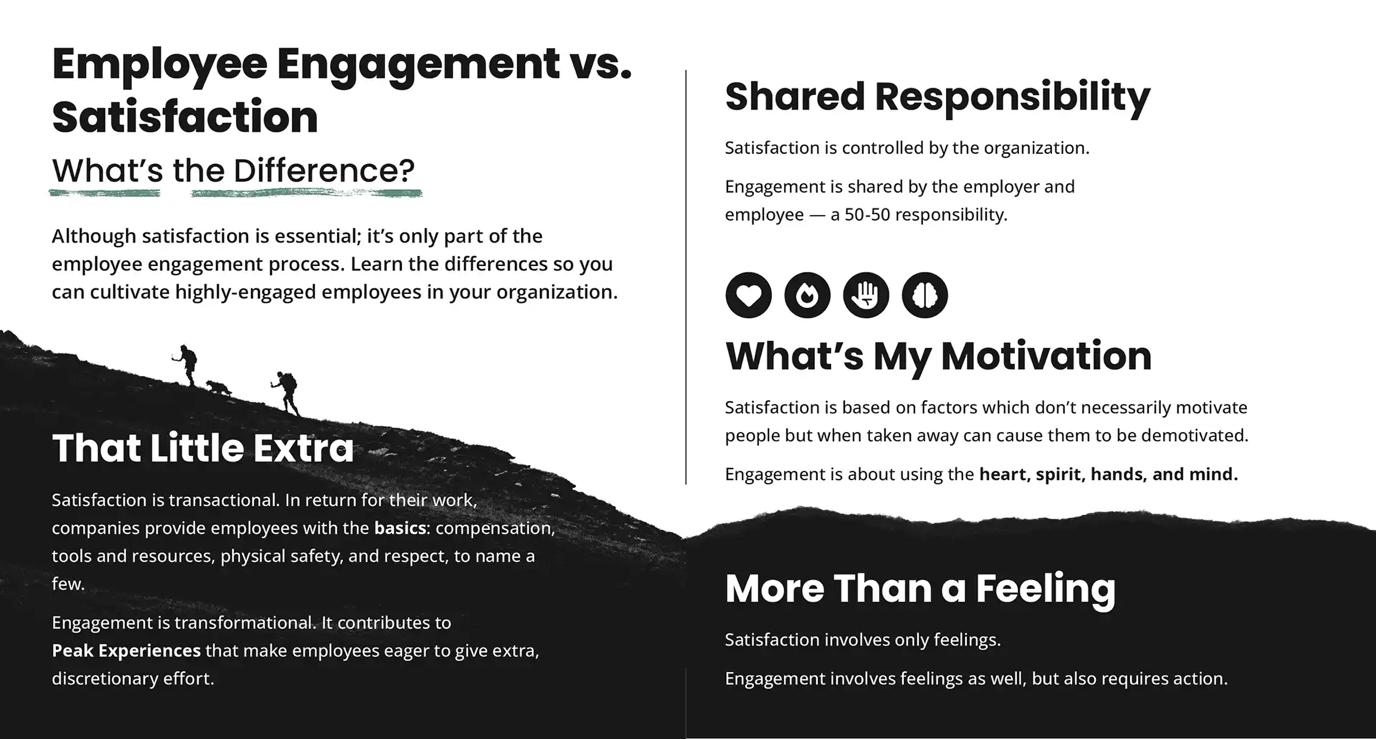
People need to continuously learn and grow, and for the average employee – learning curves start to plateau after about 2 or 3 years. What this means is, if they can’t visualise how they are going to grow with you – no matter how ‘satisfied’ they might be with their job or the organisation - they will start looking elsewhere. The dreaded ‘exit lounge’ is where employees that are disengaged, hang out.
Managers struggle with this for two main reasons:
- They feel conflicted. They want the person to stay fulifilling the role they are in, as if they leave, it means they will lose their ‘investment’ in the employee, and they will need to recruit and start again – costing time and money. So fundamentally, managers would prefer people to ‘stay as they are.
- Often, they don’t have a clear answer. There is not always a ‘ladder’ or progression road ‘upwards’ – either in their team, or in the organisation. But that’s ok – as many people who reach the end of their learning curve, are often comfortable moving ‘sideways’ – across the organisation, or taking on projects outside their ‘silo’ to continue learning.
But this is a case of ‘which would you rather?” Put in the effort to understand your employees needs beyond being ‘satisfied’ – or lose them. Because the reality is – humans are wired for growth. And growth, is a critical enabler, of engagement.
Three easy ways to start exploring how to gain more engagement with your team include:
- Open Ideation sessions, on people ‘need to haves’ vs ‘nice to haves’ in their future. This doesn’t commit you to any fixed path forwards, but instead achieves two very positive outcomes;
- Employees get to trade-off the things they would rather have, in a future role
- You get to understand how you might keep them – at a maintain level, and at an optimum level – giving you time and inputs to plan for.
- Provide employee with career planning tools, such as Actvo or Nestor – which enable them in a private way, and in their own time to figure out their options and their future, and provide you with an informed viewpoint – vs guesswork.
- Working with your Leadership team to explore ‘gig’ projects – these are not fixed roles, but rather ways you can extend your teams tenure in the organisation (if there isn’t an open FTE headcount) by enabling them to ‘work where they are most suited’. These internal gig or agile projects, can mean that you don’t lose your employee – but enable them to keep learning and growing, as an internal fractional resource, to other parts of the organisation.
Strategy 4: Why Managers can’t outsource engagement to HR – the most important role in the organisation to foster.
We’ve explored in this article how important engagement is to businesses, and also some simple ways to boost engagement as a manager. One of the most surprising things about engagement however, is how often it’s treated as the ‘job of HR’.
HR, granted, is great for providing centralised tools and organisation wide processes to ensure equalisation of intention when it comes to performance and progression of people.
However, they are not responsible for the most important relationship in the organisation – that between an employee and their manager.
When you hire someone, you are implicitly taking responsibility for their care and progression within the organisation. So engagement is a critical outcome of how well the relationship is nurtured.
When the HR team surveys for engagement and scores come back for your team lower than you hoped, that is not a reflection on them, the culture or the organisation. It’s a reflection on your relationship as leaders.
If you do nothing else well as a manager or leader – make sure you focus on how you can lift engagement. As this is the fastest way to boost productivity, lessen churn, and improve the chance of mobility of your people – honouring their desire to grow and change – whilst staying with the organisation.
In conclusion - engagement - whilst often misunderstood, outsourced, disbelieved or worse ignored, remains one of the most critical enablers of an organisations ability to keep and grow talent.
Engagement isn’t something you launch. It’s something you design into the way work happens.
Many engagement initiatives fail because they:
- Are one-off programs, not systems
- Rely too heavily on managers to “just be better coaches”
- Focus on surveys without any real follow-through
- Ignore career progression and capability growth
Employee engagement isn’t about motivation hacks or surface-level fixes.
It’s the result of:
- Emotional connection
- Meaningful growth
- Trusting leadership
- Shared ownership of the future
When people can see a path forward - and feel supported to move along it - engagement will naturally follow.
But that doesn’t come naturally for most managers or people leaders.
The organisations that will win in the coming years are the ones that make a focussed investment to help their people stay, grow, and evolve - without burning out their managers in the process.
As the role of owning engagement, sits firmly with people managers. And they need the tools & support to know how and when to focus on lifting this with their teams – especially as workforces become more diverse and distant.
In doing so, organisations could stand to benefit from what we once took for granted – the lifetime value of an employees work.
And that, I believe, is something to cherish.