Most of your people don't know what they are good at. Which is not just their problem - it's yours too.

"70% of people can't articulate clearly the skills & experience they have - or need - to transition to a new role*"
Let that sink in. Sit with it for a minute.
Not 7% - 70%.
This was the headline out of a survey we asked over 600 people to complete last month, on Career Confidence & Clarity - specifically designed to explore two things.
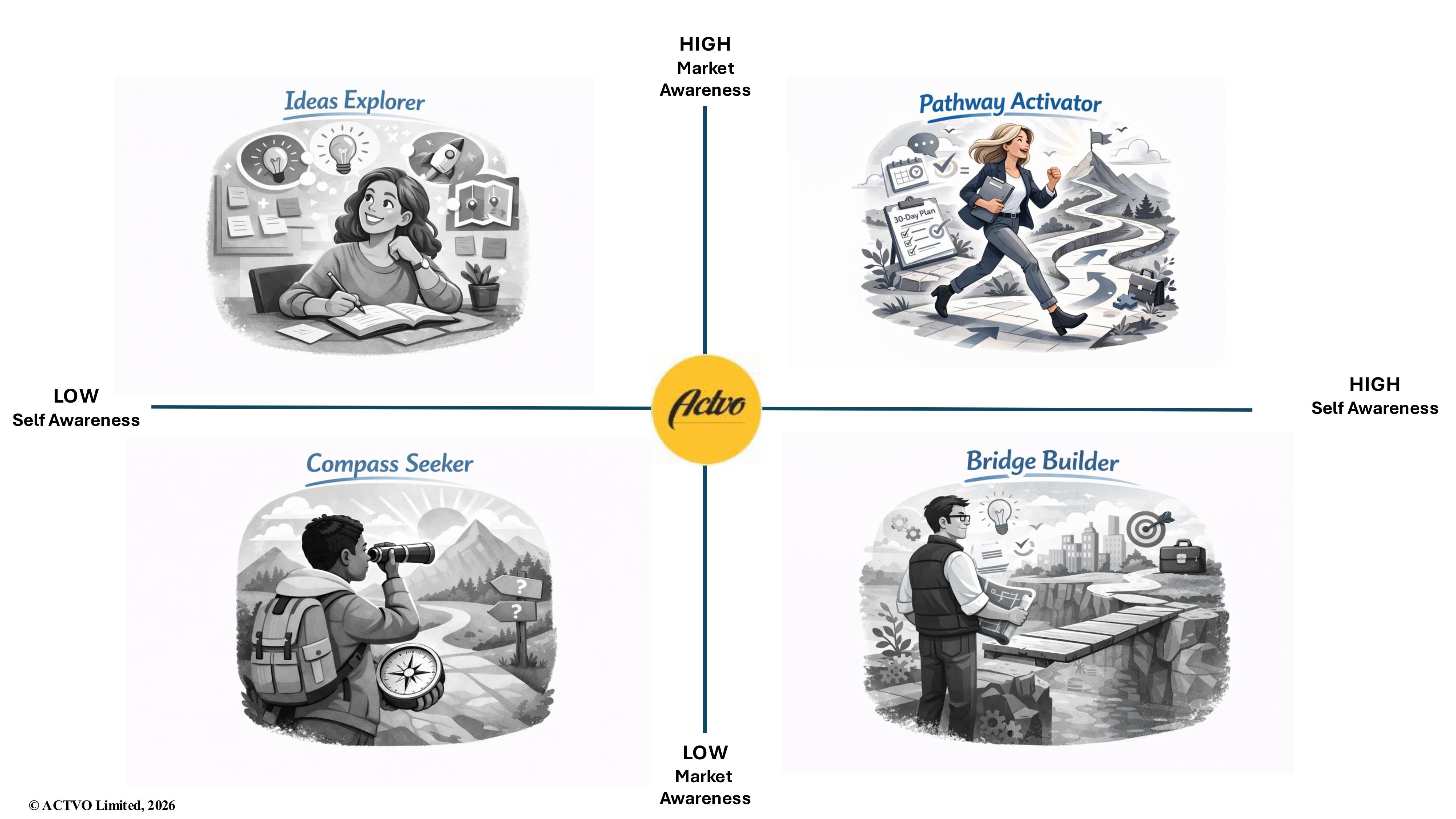
- SELF AWARENESS- how confident people are on the unique value they offer the workplace eg how well they know their skills, strengths, values and capability.
- MARKET AWARENESS - how clear people are on the future jobs or career opportunities available to them - either inside their organization or the broader marketplace.
The results confirmed much of what we already knew from working with people navigating career change - and some interestingnew insights.
Here's a snapshot of the results.
On Self-Knowledge
- 70% of people can't articulate clearly the skills & experience they have - or need - to transition to a new role
- 55% can't confidently communicate how their unique capability translates to commercial value for business
On Readiness for Change
- 77% rated themself either a 1 or 2 out of 5, on their ability to visualize future jobs or careers available to them
- 71% described themselves as either 'vaguely' or 'not at all' prepared to transition to a new role.
On Urgency
- 31% want to change jobs or careers in the next 3 months, and a further 30% in the next 6 months
Those last 3 facts are worth pausing on. Nearly two thirds of your workforce is thinking about moving. Soon. And most of them don't yet have the clarity to know how to do it well.
We call these people - "Compass Seekers".
Out of 4 personas this study revealed to those that completed it, this was by far the biggest segment. Because they took this survey, they are clearly open & curious about their future and wanting some answers.
The reality is though, without having clear insights about their talent or the market opportunities, it will be hard for them to navigate naturally to the right future roles and jobs that they are suited to confidently.
What this Means if you're Leading a Team
Most of your people won't be able to tell you what they're genuinely talented at, how that talent creates value for your business, or how they want to grow it.
Which means they're drifting.
Because without confidence and conviction in your own capability, it's near impossible to put yourself forward for progression. So you stay where you are. Engagement quietly drops. Productivity softens. The connection to the organisation frays.
And then comes the next step - looking elsewhere. People tend to adopt the logic that "a change is as good as a holiday": moving to a similar role, in a similar company, in a similar industry. It feels new and fresh, for a while. But it usually ends in the same place.
The talent walks. And the cost of replacing it is far higher than the cost of developing it.
The Bigger Risk? People just aren't prepared to Change
Beyond individual disengagement, there's a systemic risk that most organisations are only just starting to reckon with.
People don't know what will work for them next. They can't visualise how what they're doing now naturally translates into a new role or career that will keep them learning and growing.
And in the age of AI - when most organisations are actively redesigning their workforce around agents, new processes and reduced manual work - people are going to need to change. Not just the confident 20%. The majority.
The data on this is consistent: the cost of up-skilling or re-skilling existing people is significantly lower than retrenchment and rehiring new talent. The business case for acting now is clear. The question is whether we as leaders can act to solve this - before the pressure forces us to.
So What Can you Do?
Here are three things you can start doing now to help your people adapt, grow and stay - avoiding the slow burn of disengagement, difficult restructures, or preventable churn.
1. Create structured conversations about capability - not just performance
Most people haven't been asked the right questions. Not "how are you tracking against your KPIs?" but "what do you think you're genuinely great at, and "what do you want to develop new capability in?" The data shows people struggle to articulate this on their own. Leaders who create the space and the prompt will unlock things a performance review never will.
2. Help people connect their current skills to future roles
Don't wait for your people to figure this out themselves - most won't. Proactively show them how what they do today maps to what your organization will need tomorrow, especially as AI reshapes roles and responsibilities. Start the conversation early. This directly addresses the 77% who can't visualise a future career, and gets them starting to consider how they will adapt - because without any pressure to, they won't. And when people can see a path forward with you, they're far less likely to look for one elsewhere.
3. Invest in career clarity before crisis forces your hand
The reskilling-versus-retrenchment argument isn't just moral - it's financial. Build Career Clarity into how you lead, not as a response to a restructure, but as standard practice. Tools, coaching, or even facilitated team conversations can shift people from drifting to directed. The organisations that do this now will be significantly better positioned when the pace of AI change accelerates further - which it will.
Find out your Career Clarity Persona
If you or your team would like to take our quiz and find out which one of the 4 Change Personas you are, you can take the quiz now here.
*These findings come from an online survey run by Actvo in the USA, with over 600 people starting and 110 completing the study.
.avif)