What defines great Leadership in 2026?
Leadership - a historic, awesome topic.
And one that is rapidly evolving and changing as our society and planet does.
In this article I explore the history of Leadership, common leadership styles, how they are being impacted by Micro-shifts, how to improve leadership in the workplace - and my take, on a new Leadership set of principles for 2026.
Disclaimer: I’m not a leadership historian. I’m a Founder working with leaders and watching leadership evolve in real time.
So I thought I would start simply with - what defines a great leader?
What history tells us about "great leaders"
If you track leadership development in the workplace across the last (circa) 200 years, you see a clear evolution in what people mean by “great”:
Era 1: “Great leaders are born.”
1840s-early 1900s
Earliest popular thinking was rooted in the ideology of the 'hero' - typically a 'Great Man'. This defined leadership as something you were born with - a rare, innate, and personified talent. History brings us the stories of exceptional individuals. (Reference: Thomas Carlyle’s lectures (1840) published as On Heroes, Hero-Worship, and the Heroic inHistory) Examples being: Napolean, Abraham Lincoln, Winston Churchill.
Era 2: "Great Leaders have traits"
After the “Great Man” era, attention shifted to a more practical question: What qualities do effective leaders share? This gave rise to Trait Theory -the idea that leadership could be explained by identifying consistent characteristics such as confidence, intelligence, decisiveness, or charisma. For decades, researchers tried to define a universal list of leadership traits. But in 1948, Ralph Stogdill published a landmark review that changed the conversation. He concluded there was no fixed set of traits that guaranteed success. Traits matter - but only in relation to context. What works depends on the situation and the group. Iconic figures often associated with strong “trait presence” include John F. Kennedy,Margaret Thatcher, Martin Luther King Jr., and later, Steve Jobs.
Era 3: “Great leaders do things.”
1940s – 1960
This was where 'behaviours and style' entered. Researchers identified & popularized autocratic, democratic & laissez-faire styles of leadership – focusing more on the way people behaved, than their personal traits. Attention moved from who leaders are to what leaders do: how they set vision, make decisions, communicate, manage teams, and work withothers. Think Dwight Eisenhower (structured), Jack Welch (hard-driving - often discussed behaviorally), Indra Nooyi (later, people/communication behaviors).
Era 4: “Great leaders adapt.”
1960s – 1980s
The era of Adaptive & Situational Leadership. Theory shifted to “ there isn’t one best style” – great leaders are able to consider context, think adaptively andwith situational awareness. Effectiveness came from matching the approach to circumstances, capability, goals and risk. Situational leadership popularized this idea with the practical “telling/selling/participating/delegating” framing of how to lead. Examples being Nelson Mandela (context-sensitive reconciliation), Alan Mulally (turn around leadership), &later Jacinda Ardern (context + care).
Era 5: “Great leaders grow people and shape culture.”
1990s – today.
The belief most widely held now, is that leaders build performance by building people, systems, and culture. This is the rise of human-centred leadership: coaching, psychological safety, servant leadership, and learning-by-doing cultures. Recent decades have seen the elevation of great leaders who prioritize the growth and well-being of people first - as a pathway to performance and societal impact. Exemplars include: Satya Nadella (growthmindset/culture shift), Mary Barra (transformation + accountability), Reed Hastings (culture + talent density), Patagonia’s Yvon Chouinard (values-led).
Each era has demonstrated peoples capabicity for continously improving leadership skills -primarily away from power and toward enablement. And AI - is now accelerating that shift.
Tradtitional Leadership styles that have prevailed
Here are the most common leadership styles you’ll often still see referenced in business:
Decision-Centric / Power styles
These are the original, legacy styles which favour directive over participative:
- Autocratic/Authoritarian (leader solely decides)
- Democratic/Participative (team has input)
- Laissez-faire/Delegative (hands-off style)
“Leadership as a toolbox”
Daniel Goleman developed and evolved six styles (often used in exec coaching because they’re highly practical):
- Coercive (urgent compliance modality)
- Authoritative/Visionary (mobilize people toward sa vision)
- Affiliative (harmony, relationships, and collaboration)
- Democratic (participation by all)
- Pacesetting (high standards, output focus)
- Coaching (develop & grow people)
Purpose driven / Motivational styles
Styles more suited to rapid adaptation, and the rise of purpose:
- Transactional (performance-for-reward)
- Transformational (purpose, inspiration, development)
Values-anchored styles
The human-centred style, that was originally pioneered in the 70s, has had a recent resurgence.
- Servant leadership (serve first; people growth as the point and the method)
- Coaching Leadership (seeing employees as individuals to mentor and nurture)
The recent forces that have changed Leadership (COVID,remote work, gobalization & AI)
The last few years didn't just bring new leadership challenges. If we're honest, they've changed the we we operate - both inside businesses, in politics, government entitites, communities and in our social circles.
We've emerged from a monumental shift to our operating & authorizing systems as humans - how we decide what’s true, what’s fair, and what’s worth doing.
Some of the biggest shifts we've experienced that have impacted how we view and act as leaders have included:
· Hybrid & remote work - which forced leadership to become more 'explicit'.
When you can’t rely on presence, leaders had to learn how to create clarity by design: creating dialogue moments, releasing decision-making rights, real-time priority setting, multiple modes for feedback loops, and restoring human connection and 'face-time'. Leaders have been challenged to balance the need for human adaptation and blending of work and personal life, with the ongoing continued and relentless need for productivity and adherence to cultural values.
· Employee Experience - is now a major performance variable.
Employee experience used to be optional. Now it’s engineered - and it shows up directly in people’s performance. People managers were always in the driving seat of the daily 'experience', and remain the biggest driver of engagement and performance outcomes. But the scope of the role is straining through increased complexity and demands, making meeting everyone’s 'experiential needs' now a navigational mind-field. Leadership skills for managers is now a much needed imperitive, not a 'nice to have'.
Those that can run the gauntlet will win on performance. But the reality is, most managers are struggling - and hence we are seeing engagement at the people manager level falling fasting than most other parts of the organisation (Source: Gallup).
· AI shifted leaders from “knowing all” to “sense making + governance.”
Leaders typically held the domain knowledge, and were sought out for their technical + industry specific legacy expertise, to guide people and decision making. Through rapid AI adoption in theworkplace, this is changing what it means to be a leader. Effective Leadership at work is shifting, and is now becoming more about: setting broad direction, enabling managers to adapt in partnership with technology and people in ‘pods; redesigning work-flows, building Ai literacy, managing emerging risks, and creating the operating model to capture new value.
· Work has become ‘noisier’ and more fragmented
The volume of change is creating noise, anxiety,and distraction - so focus and prioritization have become leadership responsibilities, not personal ‘hacks’. Microsoft’s Work TrendIndex reporting highlights how chaotic and fragmented work feels for many employees and leaders - meaning focus, boundaries, and prioritization are nowl eadership duties, not personal hacks. Leaders are being expected to coach and mentor employees through these shifts, as an increasing part of their role.
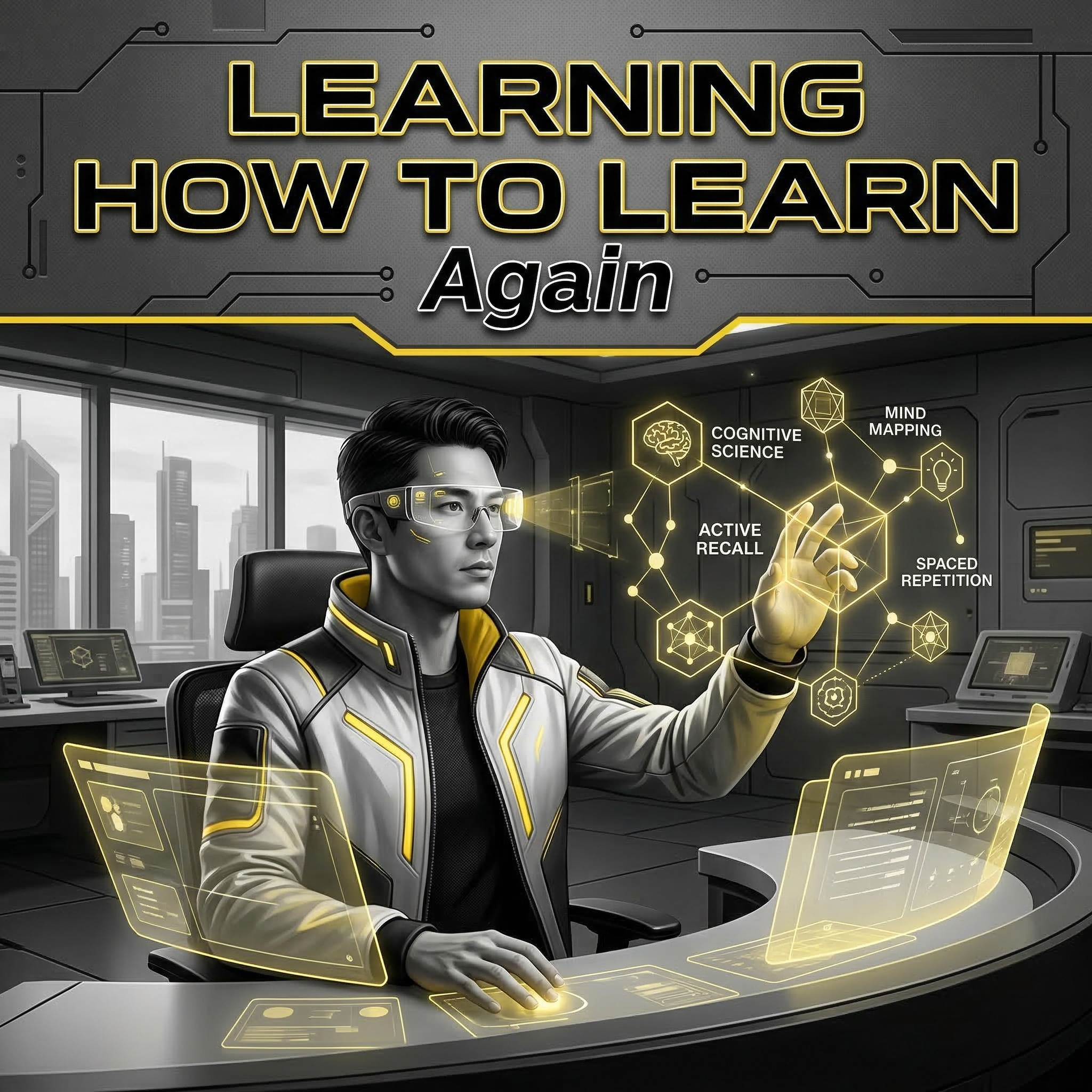
· Skills volatility has made learning a core growth + business system.
WEF’s Future of Jobs work continues to emphasize the human skills that will enable the workforce to grow in tandem with AI partnering. The soft – or ‘power-skills’ are on the rise, and most organisations – who have previously focussed their L&D efforts primarily into compliance or technical training, are on the back-foot. Most organisations are now starting to provision from the leadership level down – training for their workforce in resilience, flexibility, agility, and social influence as cultural differentiators.
Design Principles to navigate Leadership Change
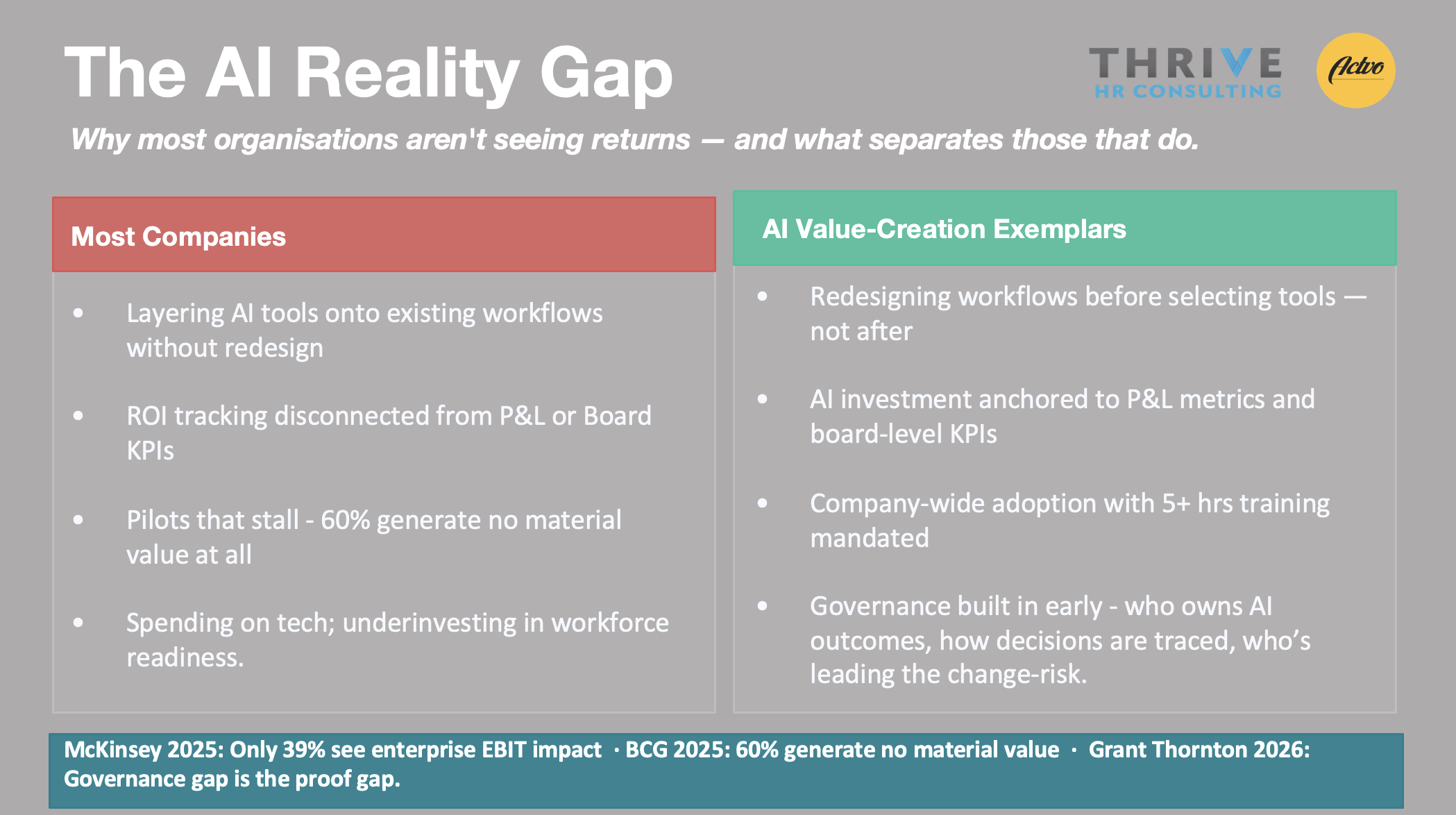
My summary take on this, is that modern leadership in the workplace now has a whole new ‘load’ to process. Both in terms of what their industry, their organisation, and their team needs from them, and how they are going to adapt their Leadership style, to thrive in the next AI Era.
Here are a few principles that could be helpful as you consider the shift:
- Trust without proximity – "How might I "build sustainable trust, when I’m not present with my team? What new ways of creating connection and intimacy are now appropriate?
- Culture without sameness - "How might we" retain our cultural values, when technology is drawing us towards ‘predictive’ outcomes? How do we encourage people to maintain their own alues and celebrate their uniqu personality when answers, nowcome easily and repetitively?
- Performance without burnout – "How might I" protect my team from a relentless avalanche of change? People can only process so much change at once. How do we ensure we don’t load them up to the point of breaking?
- Innovation without chaos – "How will we" make decisions on what to innovate, and what to keep the same? How do we experiment, without breaking what’s already working? How do we encourage trial and error in safe and supervised hot-spots?
- AI acceleration without ethical drift – " How might we" embrace AI and ensure we maintain the ethical standards we have set as a business? How will we embrace in parallel the industry standards and policies being expected of us e.g. transparency, explainability… and who’s job will it be?
- Job Adaptation at pace – "How do I " easily and accurately evaluate my teams true human and technical capability? How can I rapidly understand how to adapt each of my teamsroles, to be augmented by AI, whilst leveraging their human skills as value drivers? How do we redesign roles ethically, so people can grow with the work - and make their own call about when they can’t?
The 'Talent Activation' Leader - designed for 2026 and beyond.
As an ex Global Corporat eLeader, and someone who has worked in the ‘system’ for some decades now, I have seen a lot of change. But not like this.
I remain essentially "net-positive" about AI and its ability to transform work into a place that people can come and learn and create and bring their full human potential. To openly and safely partnerwith 'machines', to create better services and product outcomes, and potentially – allow us to earn more - and have more leisure time.
This was original thinking by Bertrand Russell an early 1900s philosopher who argued that "modern technology allowed for a reduction in work, promoting "enlightened leisure" - over the belief that work is inherently virtuous. (Check out his book – “In Praise of Idleness”).
So here’s my take on where Leadership is heading.
A great leader is not a “people-first” personality.
They’re a “people-development” system designer.
Meaning, and its most base level:
- They treat human development as core infrastructure, not encouragement and an ‘add-on’ to the job – they see it AS the job.
- They understand that emotions are data. They value emotions as a critical input to their leadership style and as a key leading indicator for productivity. They will recognise and actively respont to how their people process and signal: fear, hope & belonging, and watch for overload or unlimited potential signsl as as leading indicators of performance, retention, capacity and ethics, that they are required to respond to – not ignore.
- They accept a hard truth: if someone is in the wrong role, keeping them isn’t loyalty -it’s risk (to the individual and to the business). Great leaders create mobility by design: they support actively their people to mobilise their talent in the way that works BOTH for them and the organisation. And will actively support early exits as a way to ‘release’ unfit resources from roles that they aren’t passionate or curious about leaning into, fast. In doing so they make way for new talent that has high alignment on values, purpose and productivity into the cause.
My final viewpoint is that I believe we are moving into an era of paradox:
Leading only for business outcomes isn’t leadership - it’s an algorithm.
Leading only for human outcomes isn’t leadership - it’s caretaking.
So what will the next Generation of Leaders be like?
They will integrate the “heart” and the “head” by building repeatable mechanisms.
They will embrace polarity thinking and focus on “and” not “or”.
They see their people as their “workforce” but also “citizens”.
Theyc omfortably balance “profit” growing faster with “purpose”.
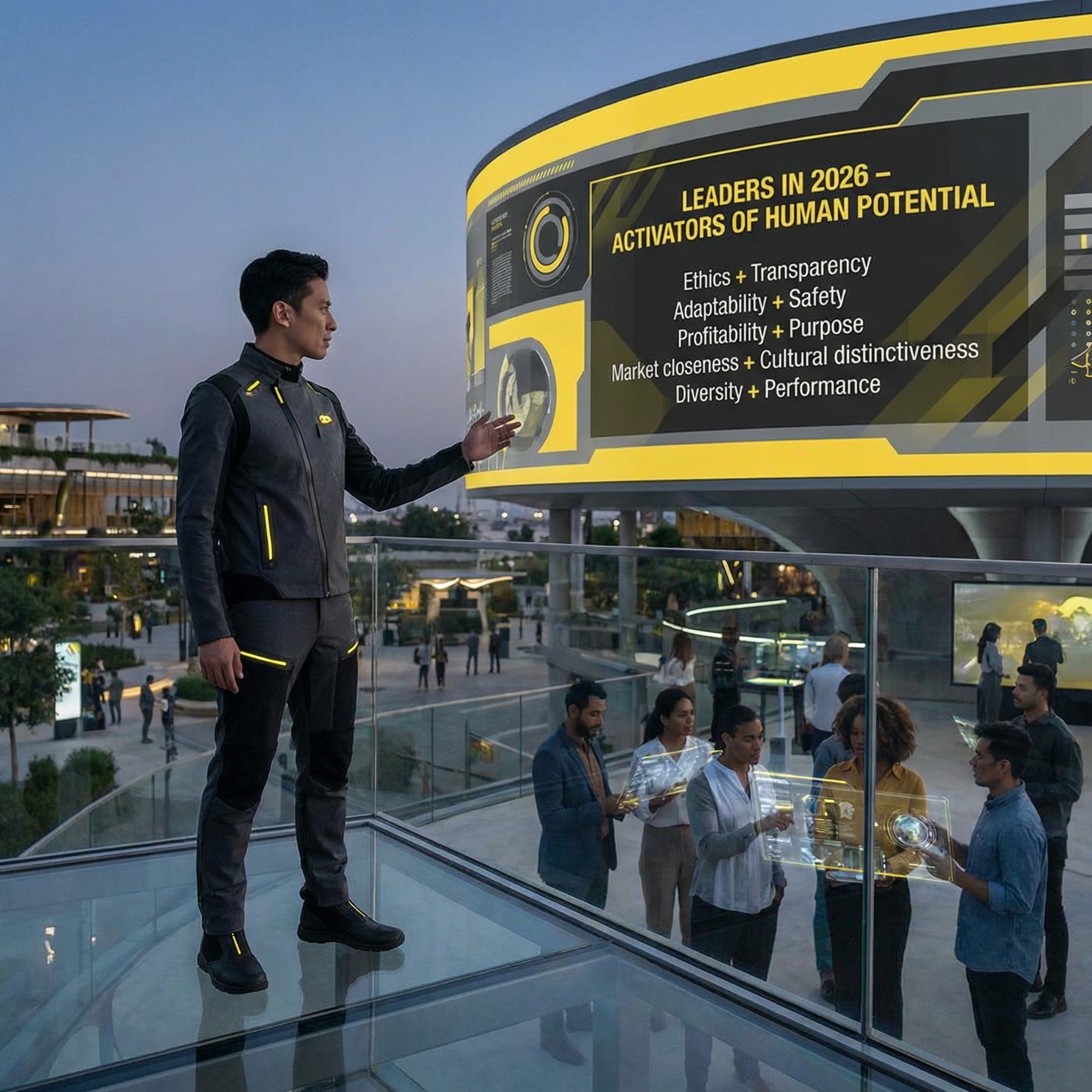
Here are some examples of emerging behaviours -
- Ethics + Transparency (explains decisions, and shows trade-offs)
- Agility+ Safety (runs fast experiments, enabling learning without blame)
- Profitability + Purpose (reduce repetitiveness and rework, whilst keeping great purposeful people)
- Market closeness + Cultural distinctiveness (talk to customers weekly, and protect your values).
- Diversity + Performance (embrace wider perspectives, resulting in fewer blind spots)
My closing thought?
“Great leaders will see their primary job as 'Activating Human Potential': they will regulate emotions, accelerate daily learning, and convert change into leveraged performance.”
. . . . . . . About ACTVO®
ACTVO® brings you both a proven Career Planning System & an Ai-enabled toolbox. Before building ACTVO® - the self-directed, all-in-one career & skills growth platform - our Founder alone spent more than 16,000 hours using data and behaviouralscience to mentor and guide professionals across industries and geographies, innew and adaptive career strategies. That work revealed a consistent problem:capable people and growing organisations struggle to turn ambition intostructured, sustainable career development.
Understanding this challenge, and how easily careers drift without clear direction and systems, is in our DNA.
That experience is now encoded in ACTVO®. Our platform brings personal career clarity, visible growth planning, learning & skill development and ongoing support into one system - to help individuals and teams move from loose intention to consistent planned progress. Improving retention, productivity and lowering of costs.
ACTVO® is particularly effective for professionals andorganisations that are ambitious but time-poor, providing the structure and visibility needed to make developing people’s performance and progression inside an organisation, simpler.
Keen to find out more? Start a free trial.
.avif)